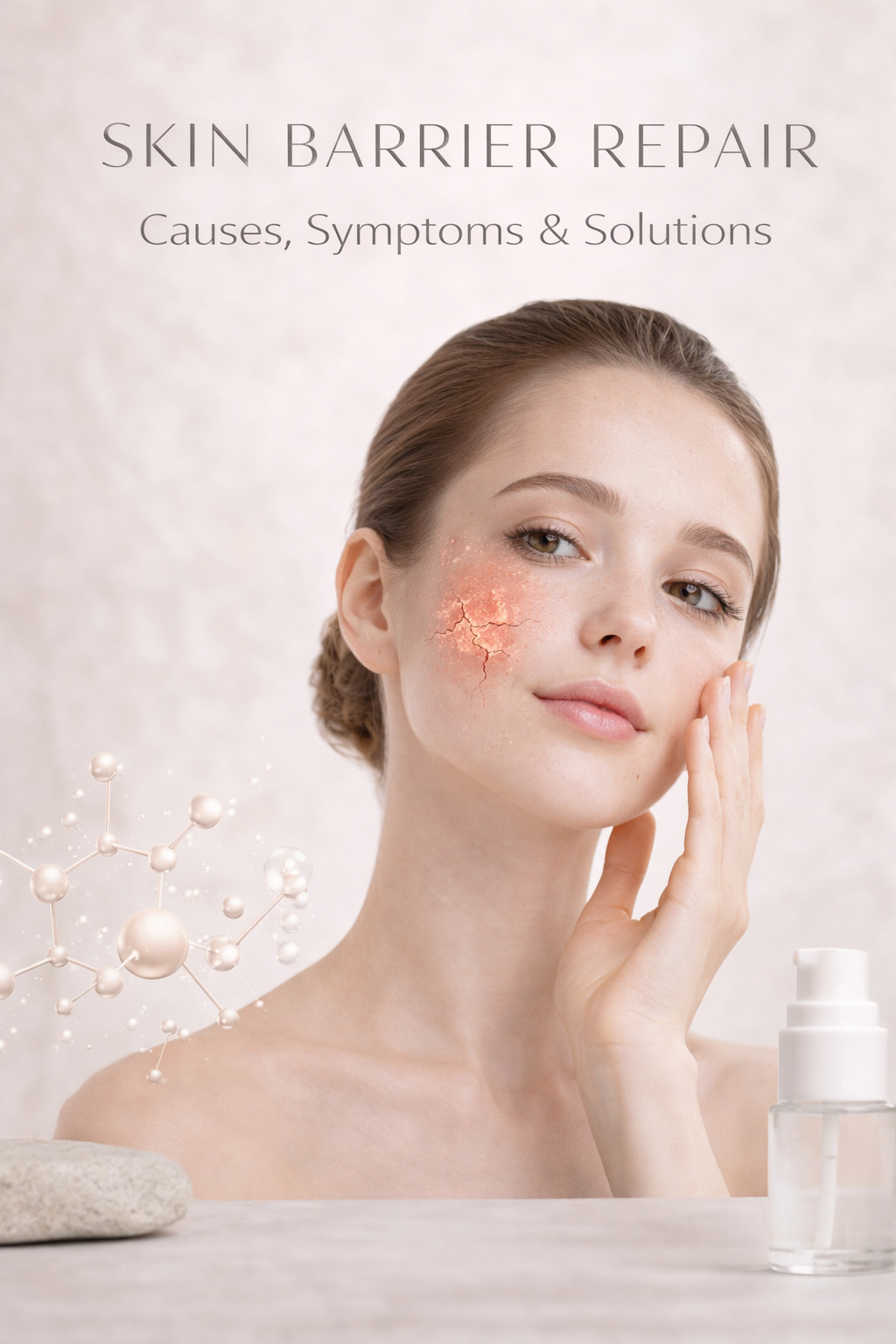
Skin barrier repair is essential for restoring hydration, reducing irritation and keeping skin healthy and resilient. Healthy skin does more than look good – it protects you. The top layer of your skin acts as a shield, blocking pollution, bacteria, and harsh weather. It also locks in moisture. This is the skin barrier, and it’s crucial for health.
A simple routine focused on hydration and gentle ingredients can support skin barrier repair and improve overall skin health.
A healthy skin barrier makes your skin feel smooth, hydrated, and strong. Everyday habits-like overdoing skincare, facing tough weather, or using harsh products-can wear it down. Once damaged, skin becomes drier, more sensitive, and more prone to irritation.
Many of us experience a weakened skin barrier at some point, often without realising why. Learning what causes this damage-and how to fix it-can make a real difference to your skin’s health and appearance.
With a solid understanding of the skin barrier’s role, the next step is to explore what puts this vital layer at risk and how you can support its recovery. This guide will break down what harms your skin barrier, how to spot the signs, and simple, proven ways to help your skin recover-plus which ingredients actually work.
Understanding the Skin Barrier
The skin barrier is part of your skin’s outer layer, the stratum corneum. This top layer is made of dead skin cells. Picture it as a brick wall: skin cells are bricks, and natural fats (lipids) are the mortar holding it together.
Here, skin cells are the bricks, and lipids-ceramides, cholesterol, and fatty acids-act as the mortar, fulfilling two crucial jobs.
First, it blocks out germs, irritants, and pollution. Second, it keeps water inside your skin, keeping it hydrated and bouncy.
When your barrier is healthy, your skin stays balanced and strong. If it’s damaged, water can escape, and irritants can get in. This leads to dryness, redness, and sensitivity.
Knowing how this works is the first step to getting your skin barrier back on track.
What Happens When the Skin Barrier Is Damaged
A damaged barrier weakens the skin’s natural defence system. Dermatologists call this increased transepidermal water loss (TEWL). It means moisture escapes the skin too quickly.
When this happens, skin can’t maintain hydration. The lipid layer is disrupted, so irritants and inflammation enter easily.
This causes a cycle of irritation and dehydration. Skin feels tight, looks dull, and may react badly to products you once tolerated.
For many people, a broken skin barrier develops gradually from the accumulation of small stressors rather than a single event.
Recognising the causes is therefore essential for proper treatment.
Common Causes of a Broken Skin Barrier
Several everyday habits can contribute to skin barrier damage. Some of these causes are related to skincare routines, while others are linked to environmental factors.
Over-Exfoliation
One of the most common causes of barrier damage is excessive exfoliation. Chemical exfoliants such as AHAs (alpha hydroxy acids), BHAs (beta hydroxy acids), and retinoids (vitamin A derivatives) can be beneficial when used properly. However, using them too frequently can strip the skin of its natural lipids.
When this happens, the protective barrier weakens, and the skin becomes more vulnerable to irritation.
Many people searching for an exfoliator for dry skin make things worse by choosing formulas that are too strong.
Harsh Cleansers
Cleansers containing aggressive surfactants can strip the skin of essential oils. While they may create a feeling of extreme cleanliness, they can disrupt the skin’s natural protective balance.
This often leads to dryness and sensitivity.
Environmental Stress
Cold weather, strong winds, UV radiation and pollution all place stress on the skin barrier. Repeated exposure to these elements over time weakens the protective lipid layer.
Overuse of Active Ingredients
Actives like retinoids, vitamin C and exfoliating acids are powerful, but layering too many can overwhelm the skin.
This is a common reason people start searching for ways to fix damaged skin barrier issues after starting a new skincare routine.
Skin Conditions and Lifestyle Factors
Certain skin conditions, such as eczema, rosacea, and chronic dryness, can naturally weaken the barrier. Lifestyle factors such as poor sleep, dehydration and excessive stress may also contribute to barrier disruption.
Signs and Symptoms of a Damaged Skin Barrier
Recognising the symptoms of barrier damage helps prevent irritation. Skin usually gives warning signals if its protective layer is compromised.
Persistent dryness is an early sign. Even after moisturising, skin may feel tight or rough.
Redness and irritation are also common indicators. The skin may appear flushed, inflamed or reactive to skincare products.
Another symptom is increased sensitivity. Products that once felt fine may now cause stinging or burning.
A damaged barrier may also lead to frequent breakouts. When the skin barrier is compromised, bacteria can more easily penetrate, triggering inflammation.
Some notice their skin looks dull and uneven. When hydration drops, healthy skin’s glow fades.
Understanding these symptoms can help identify when it is time to focus on skin barrier repair.
How to Repair Your Skin Barrier Fast (Dermatologist Guide)
The skin barrier can repair itself if given the right conditions. The key is to simplify your routine and focus on barrier-supporting ingredients.
Dermatologists generally recommend focusing on hydration, gentle cleansing and lipid restoration.
To repair skin barrier damage, temporarily stop using strong exfoliants, retinoids and aggressive peels.
Giving the skin time to recover allows the lipid matrix to rebuild naturally.
Second, pick a gentle cleanser that doesn’t strip your skin. Mild formulas that keep natural oils are best during repair.
Hydration is crucial. Hyaluronic acid and glycerin hydrate the skin, while barrier-repair lipids lock in moisture.
Consistency is essential. Barrier repair does not happen overnight, but with the right routine, many people notice improvement within 1 to 3 weeks.
Ingredients That Help Repair the Skin Barrier
Not all skincare ingredients support barrier repair. Some ingredients actively strengthen the skin’s lipid barrier, making them especially useful for treating a damaged barrier.
Ceramides
Ceramides are naturally occurring lipids (waxy, fat-like molecules) that make up a large portion of the skin barrier. When applied topically, they help replenish the mortar that holds skin cells together.
Products containing ceramides are often recommended for long-term barrier support.
Niacinamide
Niacinamide, or vitamin B3, strengthens the skin barrier and boosts hydration.
It also helps reduce redness, control oil, and support collagen.
Niacinamide is often included in a high-quality skin barrier serum because it helps reinforce the skin’s protective barrier.
Azelaic Acid
Azelaic acid supports barrier health and lowers inflammation. (Azelaic acid is a naturally occurring acid found in grains such as barley and wheat, and is commonly used to calm redness and treat breakouts.)
It helps with redness, acne, or rosacea. When combined with niacinamide, azelaic acid calms skin and balances complexion.
A formula with both Azelaic Acid and Niacinamide can be very effective for sensitive or inflamed skin.
Panthenol and Centella Asiatica
Panthenol, also known as provitamin B5, helps soothe irritated skin and improve hydration. Centella Asiatica is widely known for its calming and healing properties.
Both ingredients are often used in products designed to fix skin barrier damage.
Best Barrier Repair Serum: What Ingredients Actually Work
A good skin barrier serum speeds recovery after damage.
The best serums hydrate, add lipids, and calm inflammation.
Hydrating ingredients draw water into the skin. Lipid-replenishing ingredients restore the protective barrier structure. Anti-inflammatory ingredients reduce redness and irritation.
A balanced serum that contains Azelaic Acid and Niacinamide can be particularly beneficial because it addresses multiple concerns simultaneously. It supports barrier repair while helping to calm redness and reduce breakouts.
Choose barrier repair serums that are gentle, fragrance-free, and alcohol-free.
Over-Exfoliated Skin: How to Repair and Heal Your Barrier
Over-exfoliation is a leading cause of barrier damage in modern skincare. Many people use too many exfoliators without realising their combined effect.
First, stop exfoliating for several weeks. This allows the barrier to rebuild its natural lipids.
The routine should then focus on hydration and soothing ingredients. Gentle moisturisers, barrier-repair serums, and mild cleansers can help restore balance.
Sun protection is also essential during this time. A damaged barrier increases sensitivity to ultraviolet radiation, potentially worsening inflammation.
After recovery, reintroduce exfoliants slowly with mild formulas for sensitive or dry skin.
Choosing an exfoliator for dry skin with gentle ingredients can help maintain skin renewal without further damaging the barrier.
Building a Barrier-Friendly Skincare Routine
Creating a routine that supports barrier health does not require many products. In fact, simplicity is often the most effective strategy.
A typical barrier-repair routine begins with a gentle cleanser that removes impurities without stripping natural oils.
Next, a hydrating serum helps draw moisture into the skin. This is followed by a skin barrier serum containing ingredients such as niacinamide, ceramides or azelaic acid.
A moisturiser then seals hydration and strengthens the lipid layer. Finally, sunscreen protects the repaired barrier from environmental damage.
Consistency with this routine helps maintain long-term skin health.
Lifestyle Habits That Support Skin Barrier Repair
Skincare products play an important role in repairing a damaged barrier, but lifestyle habits also influence skin health.
Hydration is essential for maintaining the skin’s moisture balance. Drinking adequate water helps support overall skin function.
A balanced diet rich in healthy fats, antioxidants and vitamins also contributes to stronger skin.
Adequate sleep and stress management support the body’s natural repair processes. The skin performs many of its regenerative functions during sleep.
Protecting the skin from excessive sun exposure and harsh weather conditions also helps preserve the barrier.
These lifestyle habits work together with topical skincare to support long-term barrier health.
How Long Does Skin Barrier Repair Take?
The timeline for barrier repair varies depending on the severity of the damage.
Mild irritation may resolve within several days once irritating products are removed. Moderate barrier damage often requires two to four weeks of consistent care.
Severely compromised skin may take longer, particularly if the damage developed over an extended period.
The key to success is patience and consistency. Rushing the process with strong active ingredients may prolong recovery.
When the skin barrier is restored, the complexion typically appears calmer, smoother and more hydrated.
Final Thoughts
The skin barrier plays a vital role in protecting the body and maintaining healthy skin. When this protective layer becomes damaged, the skin often responds with dryness, irritation and sensitivity.
Understanding how to repair skin barrier damage begins with recognising the causes and simplifying the skincare routine. Gentle cleansing, hydration and barrier-supporting ingredients are the foundation of recovery.
Ingredients such as Niacinamide and Azelaic Acid can provide additional support by reducing inflammation and strengthening the skin’s protective structure.
With patience, consistency and the right skincare approach, even a severely broken skin barrier can recover. Restoring this protective shield allows the skin to regain its natural balance, resilience and healthy glow.
Follow us for useful content.