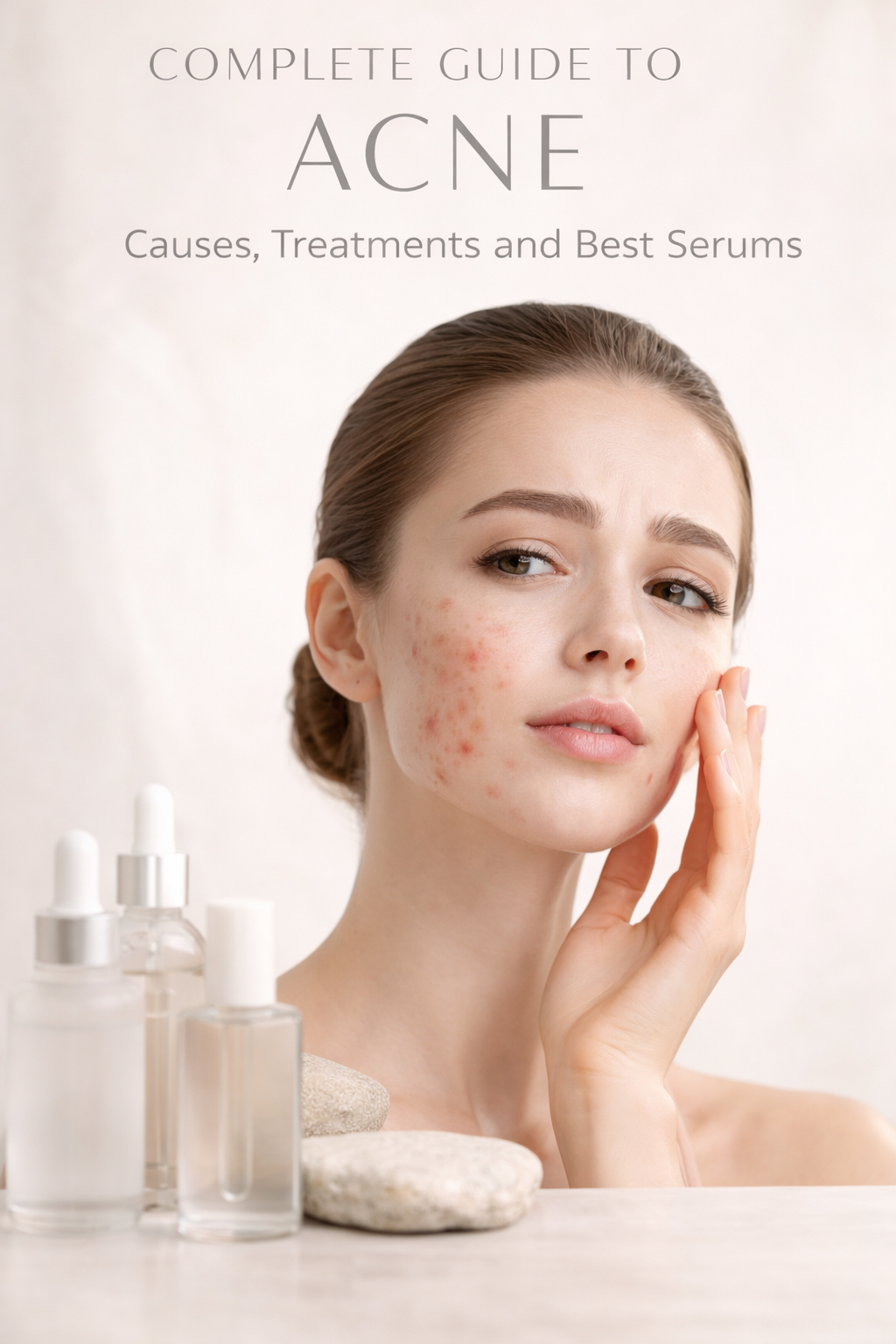
Comprehensive Acne Treatment Guide
This acne treatment guide explains the causes of breakouts and the best ingredients for clearer skin. Acne affects people of all ages-not just teenagers. Determining its causes, understanding acne types, and identifying the right skincare ingredients are key steps toward achieving clearer, healthier skin.
Following a consistent acne treatment guide can help reduce breakouts and improve long-term skin health.
The quickest way to better skin is to use effective ingredients, follow a simple routine, and choose serums suited to your needs. Randomly switching products without understanding your breakouts can lead to frustration or worsen acne.
This guide covers acne causes, types, proven ingredients, and building a straightforward routine featuring science-backed compounds like azelaic acid and niacinamide.
By the end, you’ll be able to select an effective acne serum and create a lasting skin-care routine.
Understanding Acne: What Causes Breakouts?
Acne happens when tiny hair follicles get clogged with oil, dead skin cells, and bacteria. That clog triggers inflammation, which appears as visible spots or bumps.
No single cause exists; usually, several factors trigger breakouts.
Excess Sebum Production
Your skin produces oil (sebum) to protect it, but excess-often triggered by puberty, periods, or hormone shifts-blocks pores and causes breakouts.
Dead Skin Cell Build-Up
Normally, skin sheds dead cells. If this slows, dead cells mix with oil, clogging pores and causing acne.
Bacterial Growth
Cutibacterium acnes lives on all skin. When pores are blocked, it multiplies, triggering redness, swelling, and painful pimples.
Hormones and Acne
Androgen hormones drive acne. Puberty, pregnancy, periods, and stress can spike these, triggering oil glands and breakouts.
Lifestyle and Environmental Factors
Diet, stress, pollution, and skincare habits also matter. Greasy creams, face-touching, or sleeping with makeup can worsen breakouts.
Understanding acne’s causes helps you select effective treatments and prevent future breakouts. Key takeaway: Pinpointing underlying triggers is crucial for choosing the most effective solutions.
Types of Acne
Acne takes many forms. Identifying types helps in picking the most effective treatment ingredients.
Blackheads (Open Comedones)
Blackheads appear when pores clog but remain open. The dark color-oxidized oil-usually forms on the nose, chin, and forehead.
Whiteheads (Closed Comedones)
Whiteheads are small, white or skin-toned bumps from clogged, closed pores. Trapped oil and dead skin cause these bumps.
Papules
Papules are small, red, tender bumps from irritated, inflamed, clogged pores, often seen in small groups.
Pustules
Pustules look like papules but have a yellow or white pus-filled center-the classic pimple.
Nodules
Nodules are large, painful lumps deep under the skin from inflamed pores. They rarely surface and can last weeks.
Cystic Acne
Cystic acne is severe. Deep-pore infections form painful cysts and can scar if left untreated.
Each acne type responds differently; target ingredients and consistent routines are essential. Key takeaway: Matching acne types to the right treatments yields better results.
Best Ingredients for Acne Treatment
Acne treatment effectiveness depends on active ingredients. The best ones reduce oil, unclog pores, calm inflammation, and control bacteria.
Azelaic Acid
Azelaic acid is a versatile acne ingredient. It reduces inflammation, unclogs pores, and evens skin tone.
Azelaic acid reduces redness and post-acne marks while targeting acne bacteria. It’s great for those with both breakouts and marks.
Azelaic acid also suits sensitive skin-gentle, yet effective.
Niacinamide
Niacinamide (Vitamin B3) regulates oil production, calms inflammation, strengthens your skin barrier, and helps ease redness.
Regular niacinamide use refines pores and aids healing of acne lesions.
Azelaic Acid and Niacinamide together address both inflammation and excess oil.
Salicylic Acid
Salicylic acid is a beta-hydroxy acid that penetrates deep into pores to dissolve oil and remove debris. It works as a chemical exfoliant, helping prevent clogged pores and reducing blackheads and whiteheads.
It’s especially beneficial for oily, congested skin.
Retinoids
Retinoids speed up skin cell turnover, preventing pore blockages, regulating oil production, and improving texture.
However, retinoids may irritate sensitive skin and should be introduced gradually.
Benzoyl Peroxide
Benzoyl peroxide targets acne bacteria and reduces inflammation. It’s used for moderate acne with inflammation.
Excessive use can cause dryness or irritation.
Tea Tree Oil
Tea tree oil is antimicrobial and may help with mild acne and inflammation. Always dilute to avoid irritation.
Combining ingredients often works best, targeting multiple acne causes at once. Key takeaway: Multi-ingredient solutions are often most effective for complex breakouts.
Building an Effective Acne Skincare Routine
A well-structured acne skincare routine is essential for managing breakouts and preventing new blemishes. Consistency is more important than using a large number of products.
Step 1: Gentle Cleansing
Cleansers remove excess oil, dirt, and impurities. Gentle formulas for acne-prone skin prevent clogged pores without stripping the barrier.
Over-cleansing can boost oil production, so twice daily is best.
Step 2: Targeted Treatment
Next, apply treatment products with EITHER Azelaic Acid, Niacinamide, or Salicylic Acid to address acne.
Treatment serums work best when applied to clean skin, allowing active ingredients to penetrate effectively.
Step 3: Hydration
Many people with acne avoid moisturisers, but hydration supports the skin barrier and prevents excess oil.
Use lightweight, non-comedogenic moisturisers for acne-prone skin.
Step 4: Sun Protection
Daily sunscreen, especially when used with acids or retinoids, helps prevent worsening of acne marks and pigmentation.
A broad-spectrum sunscreen protects skin and maintains treatment results.
Consistency with acne skincare can significantly improve clarity over time. Key takeaway: Consistency in your skincare steps yields the best long-term results.
Best Serums for Acne-Prone Skin
Serums deliver concentrated ingredients. The best acne serum depends on your skin type, acne severity, and concerns.
Azelaic Acid + Niacinamide Serums
Azelaic Acid and Niacinamide serums help calm inflammation, reduce oil, and even skin tone.
These are ideal for redness, post-acne marks, and mild to moderate breakouts.
Salicylic Acid Serums
Salicylic acid serums are particularly beneficial for individuals struggling with blackheads and clogged pores. These formulations penetrate deep into pores to remove oil build-up.
Retinol-Based Serums
Retinol serums aid long-term acne care by renewing skin and preventing clogs-recommended for persistent acne and texture issues.
Soothing Serums with Niacinamide
Niacinamide-focused serums help calm irritated skin and strengthen the skin barrier. These products are especially useful when acne treatments cause dryness or redness.
Introduce new serums gradually and monitor skin response. Key takeaway: Slow introduction helps identify what truly works for your skin.
Lifestyle Habits That Support Acne Treatment
Although skincare ingredients play a major role, lifestyle habits can also influence acne.
A diet rich in vegetables, whole grains, and good fats supports healthy skin. High-glycaemic foods may worsen acne for some.
Managing stress matters-stress hormones increase oil production. Key takeaway: Healthy lifestyle choices, including stress management, support clearer skin alongside great products.
Maintaining clean pillowcases, avoiding frequent face touching, and removing makeup thoroughly before sleeping can further reduce breakouts.
These small habits complement skincare routines and improve treatment outcomes.
When to Seek Professional Advice
For mild acne, consistent skincare routines and targeted ingredients may provide noticeable improvement. However, persistent or severe acne may require professional medical treatment.
Dermatologists may prescribe stronger topical medications, oral treatments, or specialised procedures depending on the severity of acne.
Early treatment can prevent long-term scarring and pigmentation issues.
Conclusion
Acne treatment requires patience, consistency, and the correct combination of ingredients. Understanding acne causes, identifying its types, and selecting the best acne-fighting ingredients can significantly improve treatment success.
An effective acne skincare routine should include gentle cleansing, targeted treatments, hydration, and sun protection. Incorporating active ingredients such as Azelaic Acid and Niacinamide provides a balanced approach that addresses inflammation, oil production, and post-acne marks.
Choosing the best acne serum often means selecting formulations that combine scientifically supported ingredients and suit individual skin needs.
Clearer skin rarely happens overnight, but with the right knowledge and consistent care, long-term improvements are achievable.
The most effective approach to acne treatment focuses on supporting the skin barrier while addressing the underlying causes of breakou