Acne Treatment Complete Guide
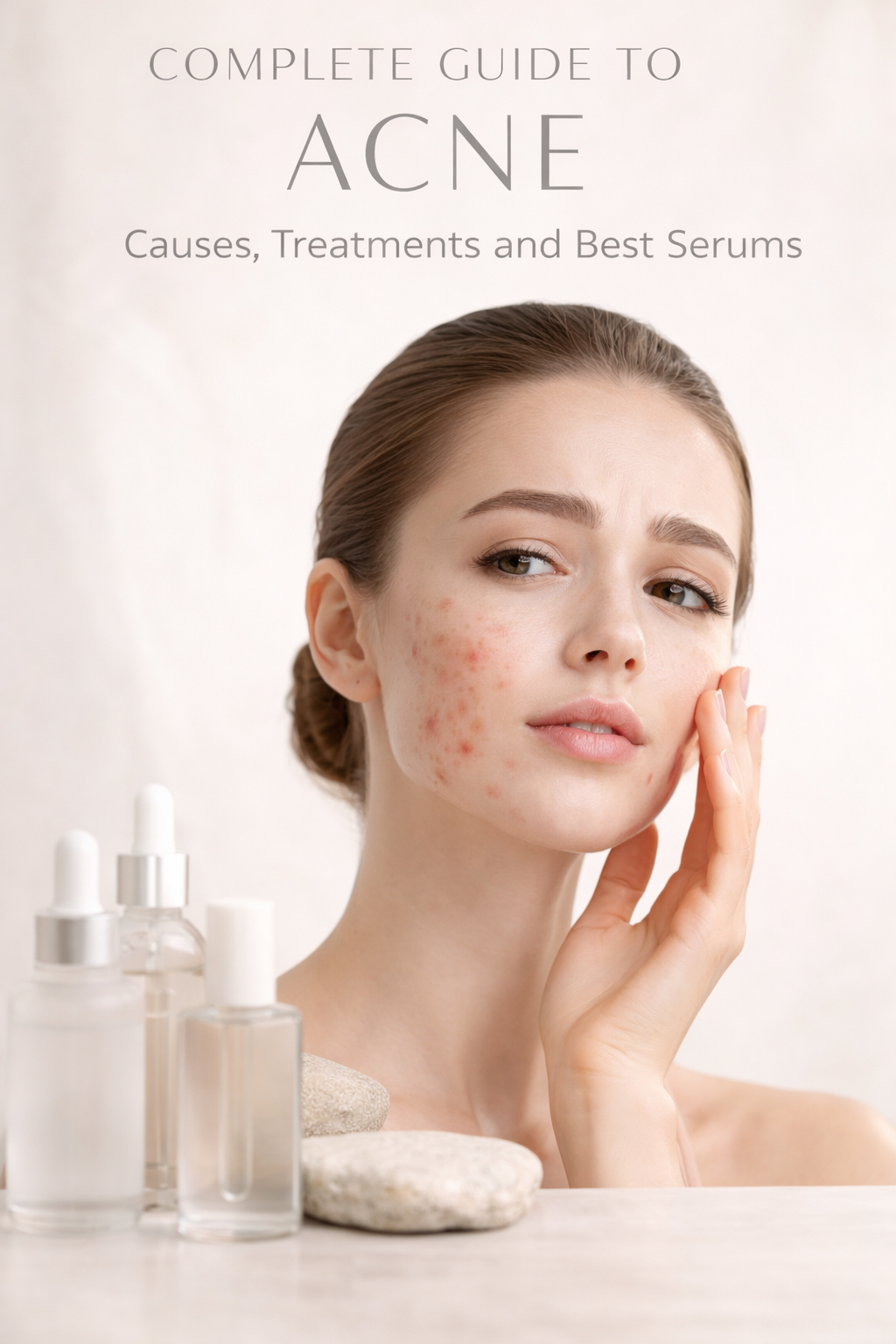
A serum for acne scars helps reduce pigmentation and improve skin texture after breakouts. Acne is a skin issue that almost everyone faces at some stage in life – whether as a teen, a young adult, or even later on. While dealing with breakouts is often frustrating, the marks and scars left behind can feel even more discouraging. These scars and dark spots may persist for months or years if they aren’t treated properly.
Using a serum for acne scars consistently can gradually fade post-acne marks and improve skin clarity.
Recent advances in skincare allow us to address breakouts and help old marks fade. Dermatologists recommend serums with proven ingredients like Azelaic Acid and Niacinamide, which soothe, even skin tone, and support healing.
This guide breaks down how acne starts, why scars form, and how to find a serum that truly helps with acne scars. You’ll also discover which ingredients are most effective – and how to build a simple routine that supports your skin’s long-term recovery.
Understanding Acne and Why It Happens
Acne happens when pores get clogged with oil, dead skin cells, and bacteria. Your skin makes oil (called sebum) to stay moisturised, but sometimes it makes too much. When excess oil and dead skin cells build up, they can clog pores – and those blockages often lead to redness and swelling.
This inflammation causes various blemishes – such as whiteheads, blackheads, and deeper bumps. The deeper kinds, such as cystic acne, are more likely to leave lasting scars because they affect the skin’s lower layers.
Acne isn’t just about having oily skin – hormones, bacteria, inflammation, and even your genes can all play a part. Stress, harsh skincare routines, and using the wrong makeup can also make breakouts worse.
While you can treat active acne with good skincare and sometimes medication, scars form when your skin tries to heal from deeper inflammation.
Why Acne Scars Form
When acne penetrates deep into your skin, it damages the surrounding tissue. Your body tries to fix this by making collagen, but sometimes it produces too much or too little, leading to different types of scars.
If your skin makes too little collagen, you get indented scars (called atrophic scars). If it makes too much, you’ll see raised scars (known as hypertrophic scars).
Besides scars, many people notice dark marks (called post-inflammatory hyperpigmentation) after acne heals. These aren’t true scars, but they can still make skin look uneven.
Proper treatment requires addressing both active acne and the marks left behind. This is where targeted skincare solutions, such as acne scar serums, become valuable.
Types of Acne Scars
Understanding the different types of acne scars can help determine the most appropriate treatment approach.
Ice-pick scars are narrow, deep scars that appear as small holes in the skin. They are often caused by severe inflammatory acne that damages deeper layers of tissue.
Boxcar scars appear as broad depressions with well-defined edges. These scars commonly develop on the cheeks and temples.
Rolling scars create a wave-like texture on the skin. They are caused by fibrous bands that pull the skin downward.
Post-inflammatory hyperpigmentation appears as dark or reddish spots after acne heals. These marks occur because inflammation triggers excess melanin production in the skin.
While deep scars sometimes require dermatological procedures, pigmentation marks and mild textural scars can often be improved with topical treatments such as an effective acne serum designed to support skin regeneration.
The Role of Serums in Acne and Scar Treatment
Serums are lightweight skincare products formulated to deliver a high concentration of active ingredients directly into the skin. Their fast absorption enables them to address specific skin issues, such as acne and scars, more effectively than heavier creams.
For acne-prone skin, the right serum can regulate oil, calm inflammation, prevent breakouts, and gradually fade pigmentation and improve texture.
A high-quality scar serum for acne works in several ways: it calms redness and swelling to reduce the risk of new scars, helps balance skin oil to keep pores clear, and accelerates the shedding of pigmented, damaged skin cells. Over time, this process leads to clearer, smoother skin.
It regulates excess oil production that contributes to clogged pores.
It supports skin renewal, helping old pigmented cells shed, and new healthy skin cells replace them.
It improves overall skin tone and texture over time.
Among the many ingredients used in dermatology, Azelaic Acid and Niacinamide have gained strong scientific support for their effectiveness in treating acne and reducing post-acne marks.
Key Ingredients That Help Fade Acne Scars
When searching for a serum for acne scars, focus on products with Azelaic Acid and Niacinamide. These active ingredients are closely studied and shown to improve acne-prone skin.
Azelaic Acid
Azelaic Acid is a naturally occurring compound derived from grains such as barley and wheat. In dermatology, it is widely recognised for its ability to treat both acne and pigmentation.
Azelaic Acid works in several ways. It has antibacterial properties that help reduce acne-causing bacteria on the skin. It also reduces inflammation, which is a major factor in both breakouts and scarring.
Another major benefit of Azelaic Acid is its ability to reduce excess melanin production. This makes it particularly useful for fading post-acne dark spots and uneven skin tone.
Because of these benefits, Azelaic Acid is often included in modern acne serum formulations designed for both acne control and scar reduction.
Niacinamide
Niacinamide, also known as vitamin B3, is another highly effective skincare ingredient. It is valued for its ability to calm irritated skin and improve the skin barrier.
Niacinamide helps regulate sebum production, which is beneficial for individuals with oily skin who experience frequent breakouts. It also reduces redness and inflammation associated with acne.
One of the most important roles of Niacinamide is its ability to brighten the skin and reduce pigmentation. This makes it particularly effective when combined with Azelaic Acid in a serum for acne scars.
These ingredients, when used together, treat active acne and gradually fade post-acne marks, offering a balanced approach.
Choosing the Best Serum for Acne Scars
Not all serums are suitable for acne-prone skin. Some products contain heavy oils or pore-clogging ingredients that can worsen breakouts.
When selecting the best serum for acne scars, several factors should be considered.
The formulation should be non-comedogenic, meaning it does not block pores. Lightweight water-based serums are usually the best option for acne-prone skin.
The serum should contain proven ingredients such as Azelaic Acid and Niacinamide that target both acne and pigmentation.
The product should also be free from excessive fragrances or harsh alcohols, which may irritate sensitive skin.
Consistency is equally important. Even the most effective scar serum for acne requires regular use over several weeks to produce visible results.
How to Use an Acne Serum Correctly
Using a serum properly is essential for achieving the best possible results.
The skincare routine should begin with a gentle cleanser that removes dirt, oil, and impurities. Cleansing prepares the skin to absorb active ingredients more effectively.
After cleansing, a few drops of the acne serum should be applied to clean, dry skin. The serum should be gently spread across areas affected by acne or scars.
Once the serum has absorbed, a moisturiser can be applied to maintain hydration and support the skin barrier.
During the daytime, sunscreen is extremely important. Sun exposure can worsen pigmentation and slow the fading of acne marks. A broad-spectrum sunscreen protects the skin and helps maintain the treatment results.
With consistent use, a well-formulated acne scar serum can gradually improve skin clarity and reduce visible marks.
You may be wondering when you’ll see visible improvements. Here’s what to expect from consistent use of serum.
Many people expect rapid results from skincare products, but acne scar treatment requires patience.
Pigmentation marks often begin to fade within four to eight weeks of consistent treatment. Deeper marks and textural scars may take several months to show noticeable improvement.
Skin regeneration occurs gradually, and the goal of a scar serum for acne is to support the natural renewal process rather than produce overnight changes.
Consistency, proper skincare habits, and sun protection all contribute to achieving long-term results.
Additional Tips for Preventing Acne Scars
Preventing acne scars begins with controlling active breakouts. The less inflammation the skin experiences, the lower the risk of scarring.
Avoid squeezing or picking acne lesions, as this can push bacteria deeper into the skin and worsen inflammation.
Maintaining a consistent skincare routine with gentle cleansing and targeted treatment can also reduce the likelihood of new scars forming.
Healthy lifestyle habits, including balanced nutrition, stress management, and adequate sleep, can further support overall skin health.
Combining these practices with an effective acne serum can help skin recover after breakouts.
Final Thoughts
Acne and acne scars can affect confidence and overall skin appearance, but effective treatment options are available. Understanding how acne develops and how scars form is the first step toward selecting the right skincare approach.
A targeted acne scar serum can improve skin texture, fade pigmentation, and help prevent new breakouts. Ingredients such as Azelaic Acid and Niacinamide are widely recommended for acne-prone skin.
When used consistently as part of a balanced skincare routine, an effective scar serum for acne can gradually transform the skin by reducing marks, calming inflammation, and promoting healthier skin renewal.
Clearer skin is rarely achieved overnight. However, with patience, scientifically supported ingredients, and consistent care, noticeable improvement is possible. A thoughtful approach to acne treatment and scar repair can lead to smoother, brighter, and healthier-looking skin over time.