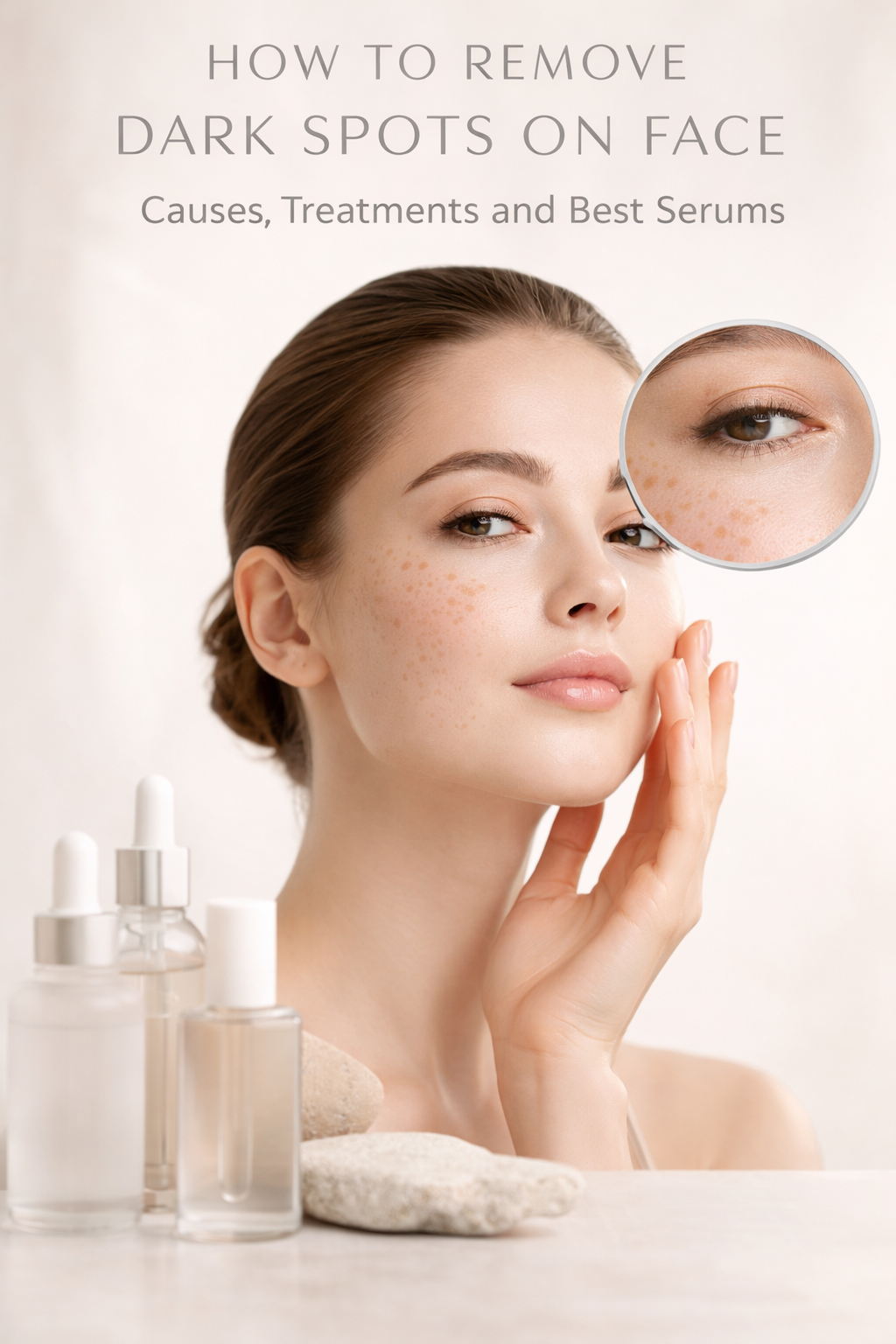
Learning how to remove dark spots on face starts with understanding their causes and choosing the right skincare ingredients. Noticing stubborn brown, grey, or dark patches on your face? You’re not alone. People of all ages and skin types experience them, caused by sunlight, hormones, aging, acne, or irritation. These harmless spots can affect your skin tone and appearance, prompting many to seek effective solutions.
Following a consistent routine designed to remove dark spots on face can gradually improve skin tone and reduce pigmentation.
Pigmentation science is straightforward: dark spots form when skin overproduces melanin, the pigment that determines skin colour. Excess melanin in certain areas results in darker patches than the surrounding skin.
Fortunately, many methods can fade dark spots. The right ingredients, a targeted serum, and consistent care can gradually even out your complexion.
This guide covers the causes of dark spots, types of pigmentation, effective ingredients, and serums that help you regain your glow.
You need to understand this: Best Ingredients to Remove Dark Spots on Face
Understanding Dark Spots and Hyperpigmentation
Dark spots are part of a condition called hyperpigmentation. Hyperpigmentation simply means that some areas of your skin look darker because they have more melanin, which is the natural pigment that gives your skin its colour.
Melanin is actually there to protect you from the sun, but when your skin gets too much sun or gets inflamed, it can start making more pigment than you need. That’s when you see those darker patches or spots appear.
Hyperpigmentation often shows up slowly and can appear almost anywhere on your face-cheeks, forehead, nose, chin, or upper lip. You might even see it on your neck, hands, or shoulders if those spots see a lot of sun.
These spots aren’t dangerous, but they can make your skin look uneven or older. With the right ingredients and consistent skincare habits, you can reduce their visibility.
What Causes Dark Spots on the Face
A bunch of things can cause dark spots-both inside and outside your body. Figuring out what’s behind yours can help you pick the best way to treat them.
Sun Exposure
Sun exposure is by far the most common reason for dark spots. When your skin is out in the sun, it ramps up melanin production-a natural pigment that gives colour to your skin, hair, and eyes-to protect you. But over time, too much sun can lead to stubborn sun spots-sometimes called age spots or solar lentigines (flat, dark areas caused by sun damage).
You’ll usually see them on parts of your face that get the most sun, like your forehead, cheeks, and nose. Skipping sunscreen can make these spots darker and harder to fade.
Post-Inflammatory Hyperpigmentation
Post-inflammatory hyperpigmentation occurs after your skin becomes inflamed or injured-think acne. Inflammation is your body’s response to injury or irritation. When a pimple heals, your skin sometimes makes too much pigment (melanin) in that spot, leaving behind a lingering dark patch.
Other triggers may include eczema, cuts, burns, or aggressive skincare treatments. These spots can vary in colour from light brown to deep brown depending on skin tone.
Hormonal Changes
Hormones can also trigger pigmentation. Melasma-sometimes called the “mask of pregnancy”-can show up during pregnancy or when you’re taking hormonal birth control.
Melasma usually looks like matching dark patches on both sides of your cheeks, forehead, or upper lip. It can be stubborn and may need special skincare ingredients to fade.
Skin Ageing
As you get older, years of sun exposure and slower skin renewal make dark spots more likely. That’s why age spots-sometimes called liver spots-are common after forty, especially on sun-exposed areas.
These spots aren’t harmful, but many people want to treat them to keep skin looking even and youthful.
Types of Pigmentation
Knowing your pigmentation type helps you choose the right treatment. Not all dark spots respond to every product.
Sun Spots (Solar Lentigines)
Sun spots develop due to prolonged exposure to ultraviolet radiation. They usually appear as flat brown patches on the face, hands, and shoulders. Sun spots are particularly common in individuals who have spent significant time outdoors without sun protection.
Post-Inflammatory Hyperpigmentation
This type of pigmentation appears after skin inflammation or trauma. Acne marks are the most common example. These spots may fade naturally over time, but can take months to disappear without treatment.
Melasma
Melasma is characterised by larger, symmetrical patches of pigmentation (darkened areas of skin). Hormonal changes and sun exposure both contribute to triggering melasma. Because melasma affects deeper layers of the skin (the dermis), it may require consistent treatment and strong sun protection to improve.
Freckles
Freckles are small pigmented spots that become more prominent with sun exposure. They are often genetic and may appear during childhood. Although freckles are harmless and natural, some individuals choose to lighten them for cosmetic reasons.
Best Ingredients for Dark Spots
Choosing the right ingredients for hyperpigmentation-areas of skin that have turned darker due to excess melanin (pigment)-is essential for effectively reducing dark spots. Modern dermatological research has identified several ingredients that help regulate melanin production and promote clearer skin.
Azelaic Acid
Azelaic acid is widely recognised for its ability to reduce pigmentation (darker areas on the skin) and calm inflammation (the body’s response to injury or irritation). It works by inhibiting tyrosinase, an enzyme involved in melanin production, the pigment that gives skin its colour. This helps lighten existing dark spots while preventing new ones from forming. Research indicates that applying 15% AZA foam twice daily to affected areas for 4 weeks resulted in a 78% reduction in overall folliculitis.
Azelaic acid is also beneficial for acne-prone skin because it helps reduce bacteria and redness. This makes it an excellent option for treating both acne and post-inflammatory hyperpigmentation simultaneously.
Niacinamide
Niacinamide, a form of vitamin B3, is another powerful ingredient for hyperpigmentation. It helps regulate melanin transfer to skin cells, reducing the appearance of dark spots and uneven tone.
Niacinamide also strengthens the skin barrier, improves hydration, and reduces inflammation. When combined with azelaic acid, it can noticeably improve skin clarity.
Vitamin C
Vitamin C is a potent antioxidant-a molecule that helps protect your skin from harmful free radicals, which are unstable molecules caused by sun exposure. Vitamin C brightens the skin and reduces the appearance of pigmentation (darker skin areas). It also supports collagen production, making the skin firmer.
Regular use of vitamin C can gradually improve skin radiance while helping prevent future dark spots.
Alpha Arbutin
Alpha arbutin is known for its gentle brightening effects. It works by slowing down melanin production. Melanin is the natural pigment responsible for the colour of your skin, hair, and eyes. Alpha arbutin is particularly suitable for individuals with sensitive skin.
Retinoids
Retinoids promote cell turnover, which means they help your skin shed old, pigmented cells and produce new ones. This helps fade pigmentation (dark spots) by encouraging the shedding of pigmented skin cells. They also stimulate collagen (a protein that provides structure and firmness) production, improving overall skin texture.
Because retinoids can increase skin sensitivity, they should be introduced gradually and used in combination with sunscreen.
Hyperpigmentation Skincare Routine
Treating dark spots on the face requires patience and consistency. A well-designed hyperpigmentation skincare routine can gradually improve skin tone while preventing new spots from forming.
Gentle Cleansing
Start with a mild cleanser that removes dirt, oil, and impurities without disrupting the skin barrier. Harsh cleansers can trigger inflammation and worsen pigmentation.
Targeted Treatment Serums
Applying a targeted serum is one of the most effective steps in a pigmentation routine. Serums formulated with azelaic acid and niacinamide (a form of vitamin B3) work deeply within the skin to reduce excess melanin (pigment) and improve clarity.
These ingredients address both pigmentation and inflammation, making them suitable for a range of skin types.
Hydration and Barrier Support
A moisturiser helps maintain the skin barrier and prevents irritation. Hydrated skin is better able to repair itself and respond positively to treatment ingredients.
Look for moisturisers containing ceramides (natural lipids that help form the skin barrier), hyaluronic acid (a molecule that holds water in the skin), or glycerin (a hydrating ingredient) to maintain optimal hydration.
Daily Sun Protection
Sun protection is the most important step in any hyperpigmentation skincare routine. Ultraviolet (UV) radiation-energy from the sun that can damage skin-can darken existing spots and trigger new pigmentation.
Using a broad-spectrum sunscreen with at least SPF 30 every day helps protect the skin and supports the effectiveness of brightening treatments.
Without sunscreen, even the best skincare products for pigmentation will struggle to deliver results.
Best Serum for Dark Spots
When searching for the best serum for dark spots, look for formulations that combine clinically supported ingredients.
A serum containing azelaic acid and niacinamide offers a powerful solution for improving uneven skin tone. This combination works in several ways:
Azelaic acid reduces melanin production and helps calm inflammation. Niacinamide improves skin barrier function and reduces pigment transfer within the skin. Together, these ingredients help fade existing dark spots while preventing new ones from developing.
Such serums are generally well tolerated by most skin types, including sensitive and acne-prone skin. Regular use can gradually brighten the complexion and restore a smoother, more even appearance.
When applying a serum, gently press a small amount into clean skin. Consistent daily use, combined with sunscreen, typically produces visible improvement over several weeks.
Lifestyle Habits That Help Prevent Pigmentation
Although skincare products play a major role in treating hyperpigmentation, certain lifestyle habits can also influence skin health.
Sun protection remains the most critical habit. Wearing hats, seeking shade, and applying sunscreen regularly can significantly reduce the risk of pigmentation.
Avoiding excessive picking or squeezing of acne lesions can also help prevent post-inflammatory marks. Allowing blemishes to heal naturally reduces the chance of long-lasting dark spots.
Maintaining a balanced diet rich in antioxidants may also support skin health. Nutrients such as vitamins A, C, and E contribute to healthy skin repair and protection.
Adequate hydration and proper sleep further support the skin’s natural regeneration process.
How Long Does It Take to See Results
Treating dark spots requires patience because pigmentation fades gradually as the skin renews itself.
Most topical treatments begin to show visible improvement after four to eight weeks of consistent use. However, deeper pigmentation, such as melasma, may take longer to improve.
Consistency is essential. Skipping treatments or neglecting sunscreen can slow progress and allow pigmentation to return.
Dermatologists often emphasise that a steady routine using effective ingredients for hyperpigmentation is more important than using many different products at once.
When Professional Treatment May Help
In some cases, professional dermatological treatments may provide faster or more dramatic improvements.
Chemical peels, laser treatments, and prescription-strength topical medications can help treat stubborn pigmentation. These treatments should always be performed or supervised by qualified professionals to minimise the risk of skin irritation.
Even when professional treatments are used, maintaining a proper skincare routine remains essential to sustain results.
Achieving Clearer, Brighter Skin
Dark spots on the face can be frustrating, but they are also one of the most treatable skincare concerns. By understanding the causes of hyperpigmentation and choosing the right ingredients, it is possible to restore a more balanced, radiant complexion.
Ingredients such as azelaic acid and niacinamide provide a scientifically supported approach to reducing pigmentation while improving overall skin health. Combined with a consistent hyperpigmentation skincare routine and daily sun protection, these ingredients can gradually fade dark spots and prevent new ones from forming.
Achieving clearer skin requires patience, consistency, and the right skincare strategy. With proper care and targeted treatments, the appearance of dark spots can improve significantly, allowing the skin’s natural brightness to shine through.