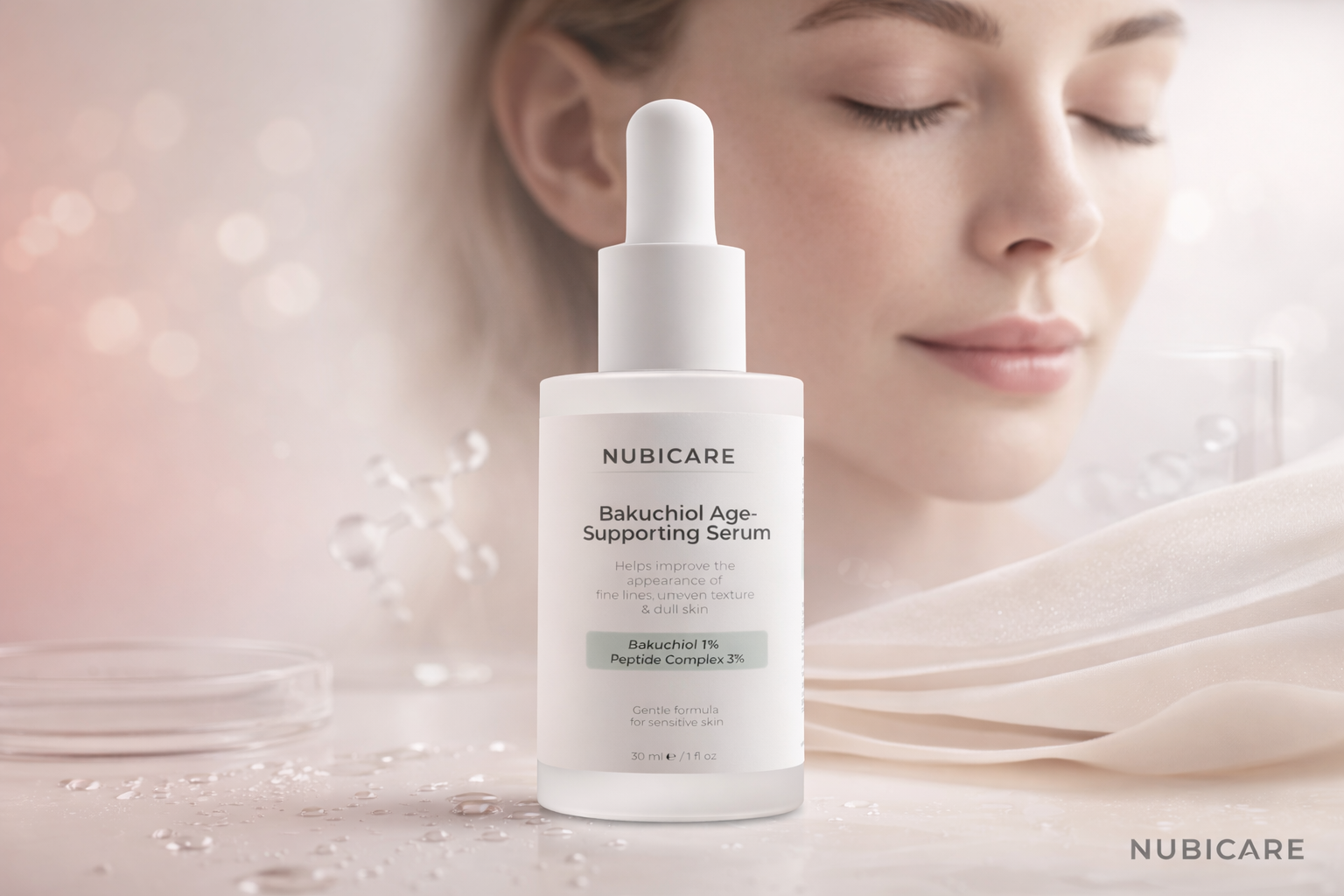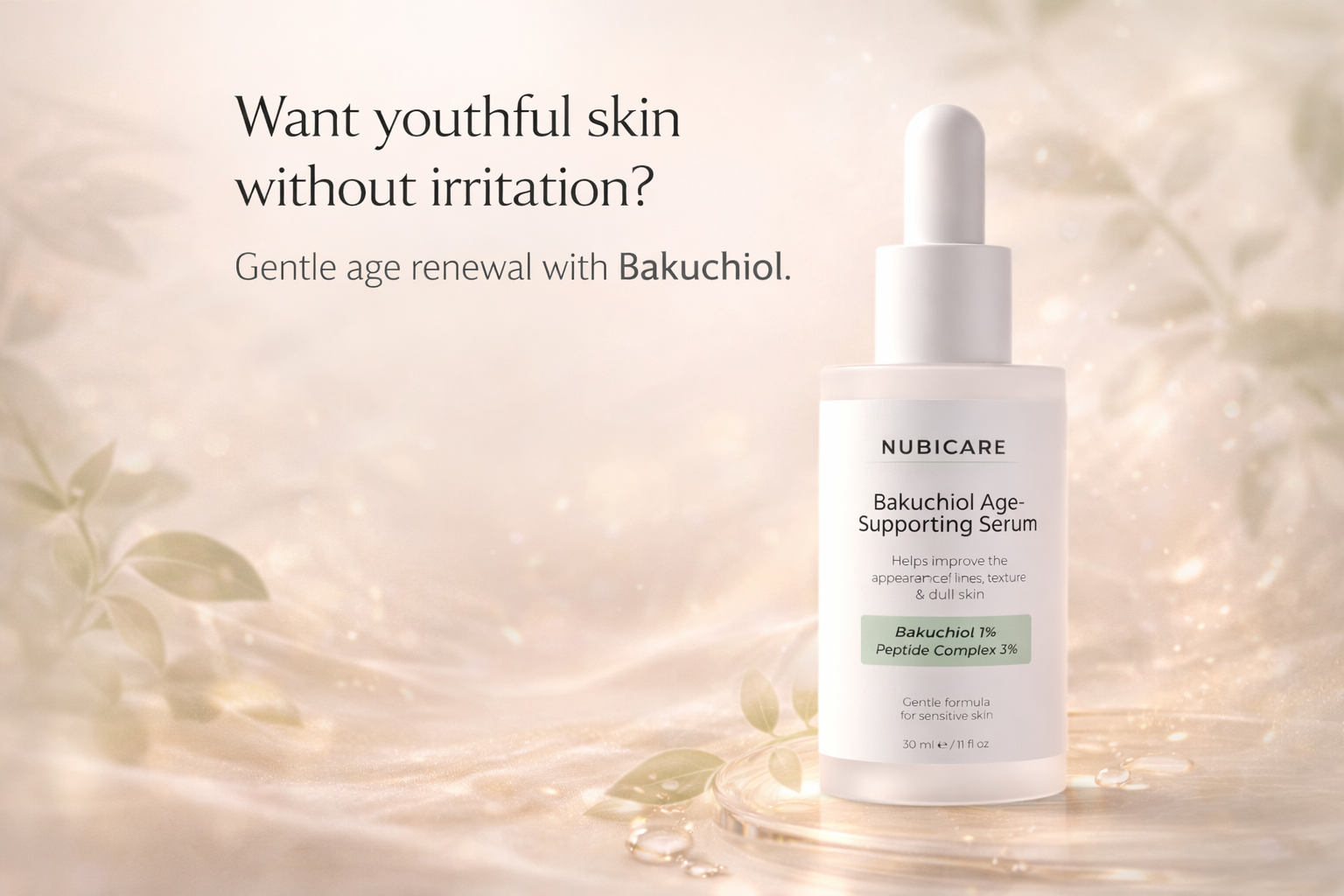
Bakuchiol skincare benefits include improving skin texture, boosting collagen production, and reducing signs of ageing without the irritation often associated with retinol. Retinol has long been a skincare staple for smoothing skin, softening lines, and managing breakouts. However, for many, especially those with sensitive skin, retinol can be too harsh, often causing redness, flaking, and dryness.
A plant-based ingredient, bakuchiol, has emerged as a gentler retinol alternative. It provides many of the same skin benefits, such as improved tone and fewer signs of aging, without uncomfortable side effects. As people seek natural options, bakuchiol has become popular for those after a balanced complexion.
Before diving in, it helps to understand what bakuchiol is and how it compares to retinol. This guide outlines the major benefits of bakuchiol and walks you through how to add a bakuchiol serum to your skincare routine, especially if you have sensitive or reactive skin.
What Is Bakuchiol? The Natural Retinol Alternative Explained
Bakuchiol is a natural compound found in the seeds and leaves of the Psoralea corylifolia plant, also called the babchi plant. For centuries, this herb has been used in traditional Ayurvedic and Chinese medicine to support skin care.
Bakuchiol is not chemically identical to retinol, but research shows it acts similarly on the skin. It boosts collagen, encourages cell renewal, and helps fade visible signs of aging.
Bakuchiol stands out by offering these benefits without retinol’s irritation. Instead of dryness and flaking, it is much gentler, making it easier for most to use while still providing visible results.
Thanks to this balance of effectiveness and gentleness, bakuchiol is increasingly appearing in modern skincare products, especially in serums designed for anti-ageing and sensitive skin.
Bakuchiol Benefits for Healthy and Youthful Skin
It’s easy to see why bakuchiol has become such a popular ingredient; its benefits speak for themselves.
These bakuchiol skincare benefits make it one of the most recommended natural alternatives to retinol for sensitive skin.
Supports Collagen Production
Collagen is essential for keeping skin firm and youthful, but as we age, our bodies produce less of it.
Bakuchiol stimulates collagen production, helping to firm skin and smooth fine lines. With regular use, skin can appear smoother and more resilient.
Reduces the Appearance of Fine Lines and Wrinkles
By supporting cell turnover, bakuchiol improves skin texture and softens signs of aging. As skin renews, fine lines and wrinkles gradually fade.
Unlike retinol, bakuchiol generally provides these benefits without peeling or irritation, making it a good choice for long-term use.
Improves Skin Tone and Texture
Bakuchiol reveals a smoother, more even complexion by helping skin shed old cells and unveil healthier ones underneath.
When combined with brightening ingredients such as azelaic acid and niacinamide, bakuchiol can further help reduce the appearance of dullness and uneven pigmentation.
Helps Calm Inflammation
Bakuchiol soothes skin, calming irritation and redness, especially for sensitive types.
Since inflammation can trigger breakouts or irritation, bakuchiol’s calming effect suits acne-prone or stressed skin.
Supports Clearer Skin
While known for its anti-aging benefits, bakuchiol also promotes clear skin by helping prevent clogged pores.
When used together with azelaic acid and niacinamide, the skin receives additional support in controlling excess oil, calming inflammation, and improving the appearance of blemishes.
You may wonder how bakuchiol holds up to retinol, given their shared reputation for anti-ageing effects. Here’s how the two compare in real-life skincare routines.
Many people search for information about bakuchiol vs retinol because both ingredients offer anti-ageing benefits. While both aim to reduce signs of ageing, bakuchiol and retinol differ in their effects on skin sensitivity, irritation, and application suitability.
Retinol, a derivative of vitamin A, has been widely used for decades to treat fine lines, acne, and uneven skin texture. Compared to other topical treatments, retinol stands out for accelerating cell turnover and stimulating collagen production, but it frequently causes more dryness, peeling, irritation, and increased sensitivity to sunlight.
Bakuchiol offers a milder option that mimics similar effects without the harsh adjustment phase.
Skin Tolerance
One of the biggest differences between bakuchiol and retinol is tolerability. Retinol can cause irritation, particularly when first introduced into a routine.
Bakuchiol is less likely to cause redness, peeling, or dryness. This makes it ideal for those sensitive to retinol.
Suitability for Sensitive Skin
Sensitive skin often struggles with retinol, but bakuchiol is more manageable since it does not disrupt the skin barrier.
Daytime Use
Retinol is generally used at night because it increases sensitivity to sunlight. Bakuchiol is more stable and can be used both morning and evening in many skincare routines.
Gentle Yet Effective Results
Retinol is powerful, but bakuchiol offers comparable improvements in skin texture and aging with fewer side effects. This balance is why many experts recommend bakuchiol as a natural alternative.
How to Use Bakuchiol Serum for Anti-Ageing (Beginner Routine)
Adding bakuchiol serum to your routine is simple, especially for beginners wanting anti-aging benefits without irritation.
Step 1: Gentle Cleansing
Begin with a mild cleanser that removes dirt, excess oil, and impurities without stripping the skin barrier. Cleansing prepares the skin to absorb active ingredients more effectively.
Step 2: Apply Bakuchiol Serum
After cleansing, apply a few drops of bakuchiol serum to the face and neck. Gently massage the serum into the skin using upward motions.
Because bakuchiol is generally well tolerated, it can often be used once or twice daily depending on the product formulation.
Step 3: Use Supporting Ingredients
To maximise results, bakuchiol pairs well with ingredients that support skin health.
A formula containing azelaic acid and niacinamide can help improve skin clarity, reduce redness, balance oil production, and brighten uneven skin tone.
This combination supports multiple skin concerns simultaneously, including ageing, acne, and pigmentation.
Step 4: Moisturise
Follow with a hydrating moisturiser to lock in moisture and maintain a healthy skin barrier.
Step 5: Apply Sunscreen in the Morning
Sun protection is essential for any skincare routine. A broad-spectrum sunscreen helps protect the skin from UV damage, which contributes to premature ageing and pigmentation.
Is Bakuchiol Safe for Sensitive Skin? Dermatologist Guide
One of the most common questions about this ingredient is whether bakuchiol for sensitive skin is truly safe.
In most cases, bakuchiol is well tolerated by sensitive and reactive skin types. Its anti-inflammatory properties help calm irritation rather than triggering it.
Dermatologists often recommend bakuchiol for individuals who experience redness or dryness when using stronger retinoids.
Several factors contribute to its suitability for delicate skin:
First, bakuchiol does not disrupt the skin barrier in the same way retinol sometimes can. This reduces the likelihood of dryness and peeling.
Second, it supports skin renewal gradually rather than aggressively accelerating cell turnover.
Third, its soothing properties help maintain skin balance, making it suitable for people dealing with redness or mild irritation.
Even though bakuchiol is considered gentle, it is still advisable to introduce new skincare products gradually. Performing a patch test before the full application can help ensure the skin responds well to the ingredient.
Combining Bakuchiol with Other Skincare Ingredients
One advantage of bakuchiol is its compatibility with other skincare ingredients. Unlike some active compounds that conflict with each other, bakuchiol integrates easily into most routines.
When paired with azelaic acid and niacinamide, bakuchiol can address multiple skin concerns simultaneously.
Azelaic acid helps reduce redness, improve uneven pigmentation, and support clearer skin. Niacinamide strengthens the skin barrier, balances oil production, and improves skin texture.
Together with bakuchiol, these ingredients create a balanced skincare approach that supports both anti-ageing and overall skin health.
This combination can be especially helpful for individuals dealing with multiple concerns, such as fine lines, acne marks, redness, and uneven skin tone.
So, who can benefit most from bakuchiol in their skincare? Let’s look at which skin types and goals align best with this natural alternative.
Bakuchiol is suitable for a wide range of skin types and concerns.
Individuals with sensitive skin who cannot tolerate retinol often find bakuchiol to be an excellent alternative.
People looking for a natural skincare ingredient may also prefer bakuchiol because it is derived from plants rather than synthetic vitamin A derivatives.
Those beginning their anti-ageing skincare journey may benefit from starting with bakuchiol before introducing stronger retinoids.
Bakuchiol can also be useful for individuals who want a gentler daily ingredient that improves skin texture and tone over time.
Final Thoughts: Why Bakuchiol Is the Best Natural Retinol Alternative
Bakuchiol has quickly become one of the most exciting ingredients in modern skincare. By offering many of the benefits traditionally associated with retinol while remaining gentle on the skin, it provides a balanced solution for people seeking effective yet comfortable skincare.
Understanding what bakuchiol is and the full range of bakuchiol benefits helps explain why it is widely recognised as the best natural retinol alternative.
From improving skin texture and reducing the appearance of fine lines to supporting clearer and calmer skin, bakuchiol delivers multiple benefits in a single ingredient.
When used consistently as part of a well-designed skincare routine, especially alongside supportive ingredients such as azelaic acid and niacinamide, bakuchiol can help promote healthier, smoother, and more radiant skin over time.
For individuals seeking anti-ageing results without the irritation often associated with retinol, bakuchiol offers a gentle, effective path toward long-term skin health.