Dark Spots on Face Treatment Guide 2026
Dark spots on face treatment often requires understanding what causes hyperpigmentation and how skincare ingredients can gradually fade pigmentation, you’re far from alone. People of all ages and skin types deal with these patches of deeper colour – often left behind after acne, sun exposure, or irritation. They can feel like unwanted reminders that stick around for weeks or even months, sometimes affecting how we feel about our skin.
The good news? Thanks to advances in skincare and dermatology, we have a much better understanding of why dark spots show up – and what actually helps them fade. With the right ingredients, daily sun protection, and a little patience, you can help your skin look clearer and more even.
This guide will walk you through what causes dark spots, how to clear them safely, and which ingredients are genuinely worth looking for in serums and treatments.
Understanding Dark Spots and Hyperpigmentation
Hyperpigmentation simply means some parts of your skin become darker than others. This happens when your skin makes too much melanin – the natural pigment that gives our skin, hair, and eyes their colour.
Melanin production is a protective response of the skin. When the skin experiences inflammation, injury, or ultraviolet exposure, melanocytes produce additional pigment to protect the deeper layers of the skin. However, this process can become uneven, leading to visible dark spots.
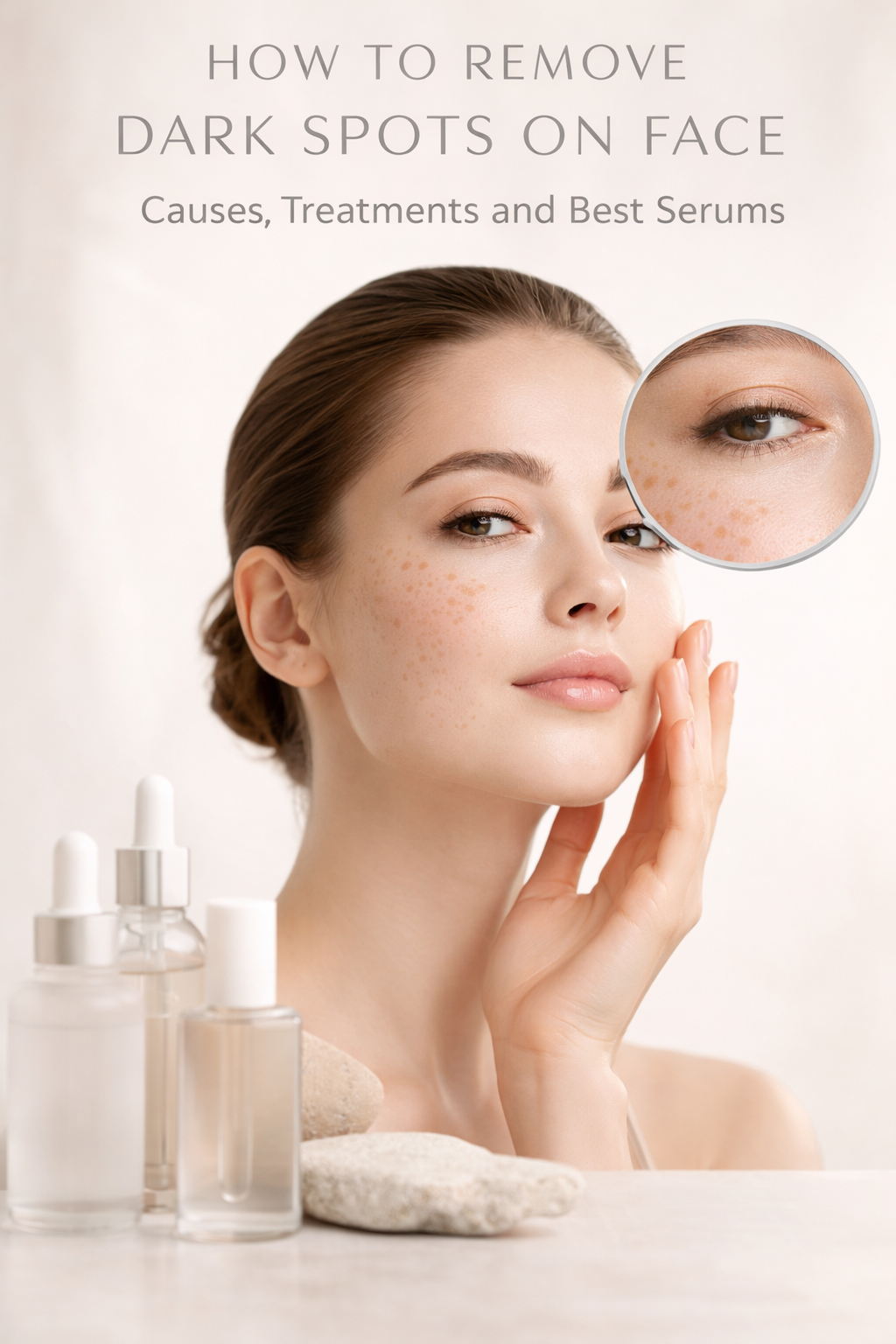
Dark spots on the face may appear as small freckles, patches of pigmentation, or flat brown marks. They often develop in areas of the skin that receive frequent sun exposure, such as the cheeks, forehead, nose, and chin.
While dark spots and hyperpigmentation aren’t dangerous, they can definitely impact how we feel about ourselves. Understanding what causes them is the first step to finding an approach that actually works.
Common Causes of Dark Spots on the Face
Several factors can trigger hyperpigmentation. The most common cause is prolonged sun exposure. Ultraviolet radiation stimulates melanin production, which can lead to sunspots, also known as solar lentigines.
Another frequent cause is post-inflammatory hyperpigmentation. This type of pigmentation appears after the skin heals from inflammation caused by acne, cuts, burns, or aggressive skincare treatments. When the skin repairs itself, excess pigment may remain behind, leaving dark marks.
Hormonal changes can also contribute to pigmentation disorders. Conditions such as melasma often appear during pregnancy or while using hormonal medications. These patches usually form symmetrically on the face and can be challenging to treat without proper skincare.
Ageing is another factor that contributes to the formation of dark spots. As the skin ages, the cumulative effects of sun exposure and environmental stress can lead to irregular pigmentation.
In some cases, irritation from harsh skincare products or excessive exfoliation may also lead to increased pigmentation.
Types of Hyperpigmentation
Not all dark spots are the same. Dermatologists classify hyperpigmentation into several types based on their underlying cause.
Post-inflammatory hyperpigmentation develops after skin injury or inflammation. It is commonly seen after acne breakouts and often appears as flat brown or purple marks on the skin.
Sunspots or age spots develop due to long-term ultraviolet exposure. They typically appear as small brown patches on areas that are frequently exposed to sunlight.
Melasma is a hormonally triggered form of pigmentation that appears as large symmetrical patches on the cheeks, forehead, or upper lip.
Understanding the type of hyperpigmentation helps determine which treatments and ingredients will be most effective.
How to Remove Dark Spots on Face Naturally and Fast
It’s only natural to want a quick fix for dark spots, especially with so many home remedies floating around online. But the truth is, even the best natural solutions take time – pigmentation fades slowly, not overnight.
One of the most important natural approaches is consistent sun protection. Daily use of a broad-spectrum sunscreen prevents existing spots from darkening and helps prevent new ones from forming.
Gentle exfoliation is another useful strategy. Removing the outer layer of dead skin cells allows fresh skin to surface and helps pigmentation fade more evenly. Mild exfoliating acids such as lactic acid or mandelic acid can improve skin tone without causing irritation.
Antioxidants in skincare also support the natural fading process. Ingredients such as vitamin C help brighten the skin and reduce the appearance of uneven pigmentation.
Keeping your skincare routine simple and gentle is just as important. When your skin barrier is healthy, your skin can renew itself more easily, and those dark marks will eventually fade.
Although natural approaches can help improve skin appearance, persistent hyperpigmentation often requires targeted ingredients found in scientifically formulated treatments.
How to Clear Dark Marks on Face:
Dermatologist Guide
Dermatologists usually recommend a combination approach when treating dark spots. The goal is to reduce excess pigment, encourage skin renewal, and prevent new pigmentation from forming.
The first step is controlling the trigger that caused the pigmentation. For example, treating acne can prevent the formation of new post-inflammatory dark marks.
The second step involves using active ingredients that regulate melanin production. Certain dermatological ingredients are known to interrupt the pigmentation process and gradually lighten dark patches.
Skin renewal also plays an important role in treatment. As the skin naturally regenerates every few weeks, targeted ingredients can accelerate the process and help remove pigmented cells.
Consistent sun protection is always considered essential. Without proper sun protection, treatment products may become less effective because ultraviolet exposure continues to stimulate melanin production.
When you combine these steps with a routine that works for you, real improvements usually show up after a few weeks. It’s all about consistency and not giving up too soon.
Best Serum for Dark Spots: What Ingredients Actually Work
Choosing the right dark spot serum can significantly improve treatment effectiveness. Dermatological research has identified several ingredients that are particularly effective in fading pigmentation.
Azelaic acid is widely recognised for its ability to reduce pigmentation and calm inflammation. It works by inhibiting the enzyme involved in melanin production, which helps prevent excess pigment formation. At the same time, it gently exfoliates the skin and reduces redness associated with acne.
Niacinamide, also known as vitamin B3, supports skin barrier health while helping to reduce the transfer of pigment to skin cells. This makes it an effective ingredient for improving uneven skin tone and overall skin brightness.
When azelaic acid and niacinamide are combined in a dark spot serum, they provide a balanced approach to pigmentation treatment. Azelaic acid helps regulate pigment production, while niacinamide improves skin texture and strengthens the skin barrier.
Other supportive ingredients that may appear in a dark spot corrector include vitamin C, liquorice extract, and alpha hydroxy acids. These ingredients help promote skin renewal and brighten dull skin.
However, it is important to choose formulations that are well-balanced and gentle enough for daily use. Harsh treatments may irritate the skin, worsening pigmentation rather than improving it.
Dark Spot Corrector: Ingredients That Actually Fade Pigmentation
A well-formulated dark spot corrector targets different stages of the pigmentation process.
Some ingredients prevent the formation of new pigment by interfering with melanin production. Others help break down existing pigment within the skin. A third category promotes faster skin cell turnover, gradually replacing pigmented cells with new, healthy skin.
Azelaic acid plays a particularly valuable role because it addresses several of these mechanisms simultaneously. It helps reduce pigmentation while also calming inflammation, which is important for people who experience acne-related dark marks.
Niacinamide complements this process by improving the skin barrier and reducing uneven skin tone. Together, these ingredients help create a smoother and brighter complexion over time.
Consistency is essential when using a dark spot corrector. Pigmentation does not fade overnight, and most treatments require several weeks of regular use before visible improvement appears.
Building an Effective Skincare Routine for Hyperpigmentation
A consistent skincare routine is the foundation of any successful pigmentation treatment plan. The routine does not need to be complicated, but it should focus on protecting and renewing the skin.
The morning routine should begin with a gentle cleanser that removes excess oil and impurities without stripping the skin. After cleansing, a treatment serum containing ingredients such as azelaic acid or niacinamide can be applied to target pigmentation.
Moisturiser helps maintain hydration and strengthens the skin barrier, allowing the skin to better tolerate active ingredients.
The most important final step is sunscreen. Daily application of a broad-spectrum sunscreen with adequate protection prevents worsening of existing dark spots from ultraviolet exposure.
During the evening routine, cleansing removes dirt, sunscreen, and pollutants that accumulate throughout the day. Treatment products can then be applied overnight to support skin renewal.
With consistent use, this routine gradually improves skin clarity and helps reduce visible pigmentation.
How Long Does It Take to Fade Dark Spots
Many people expect pigmentation treatments to work quickly, but skin regeneration takes time. On average, the skin renews itself approximately every four weeks.
As treatment products promote healthier skin turnover, pigmented cells are gradually replaced by new skin cells. Because of this natural cycle, noticeable improvement often appears after several weeks of consistent treatment.
More stubborn forms of hyperpigmentation, such as melasma, may require several months of treatment before significant improvement is visible.
Sticking with your routine is key. If you stop too soon, you might miss out on the results you’ve been working toward.
Preventing Future Dark Spots
Prevention plays an important role in maintaining clear skin after pigmentation has faded.
Sun protection remains the most effective preventive measure. Even short periods of ultraviolet exposure can stimulate melanin production and cause pigmentation to return.
Maintaining a healthy skincare routine also helps prevent irritation and inflammation that could lead to new dark marks. Gentle cleansing, balanced hydration, and targeted treatment products support overall skin health.
Managing acne effectively is another important preventive step. By reducing breakouts and inflammation, the likelihood of developing post-inflammatory pigmentation decreases significantly.
Conclusion
Dark spots and hyperpigmentation are common skin concerns, but they can be managed effectively with the right knowledge and skincare approach. Understanding what causes dark spots on the face and how pigmentation develops enables individuals to choose treatments that address the root of the problem rather than merely mask the symptoms.
Dermatological ingredients such as azelaic acid and niacinamide have become valuable tools in modern skincare because they work on multiple aspects of pigmentation. When used consistently in a well-formulated dark spot serum or dark spot corrector, they can help reduce visible pigmentation while supporting overall skin health.
Equally important is maintaining a gentle skincare routine and protecting the skin from ultraviolet exposure. Over time, these combined strategies can significantly improve skin tone and clarity.
Clearer skin takes time. But if you’re patient and consistent – and use the right ingredients – those dark spots can slowly fade, and your skin can look brighter and healthier.