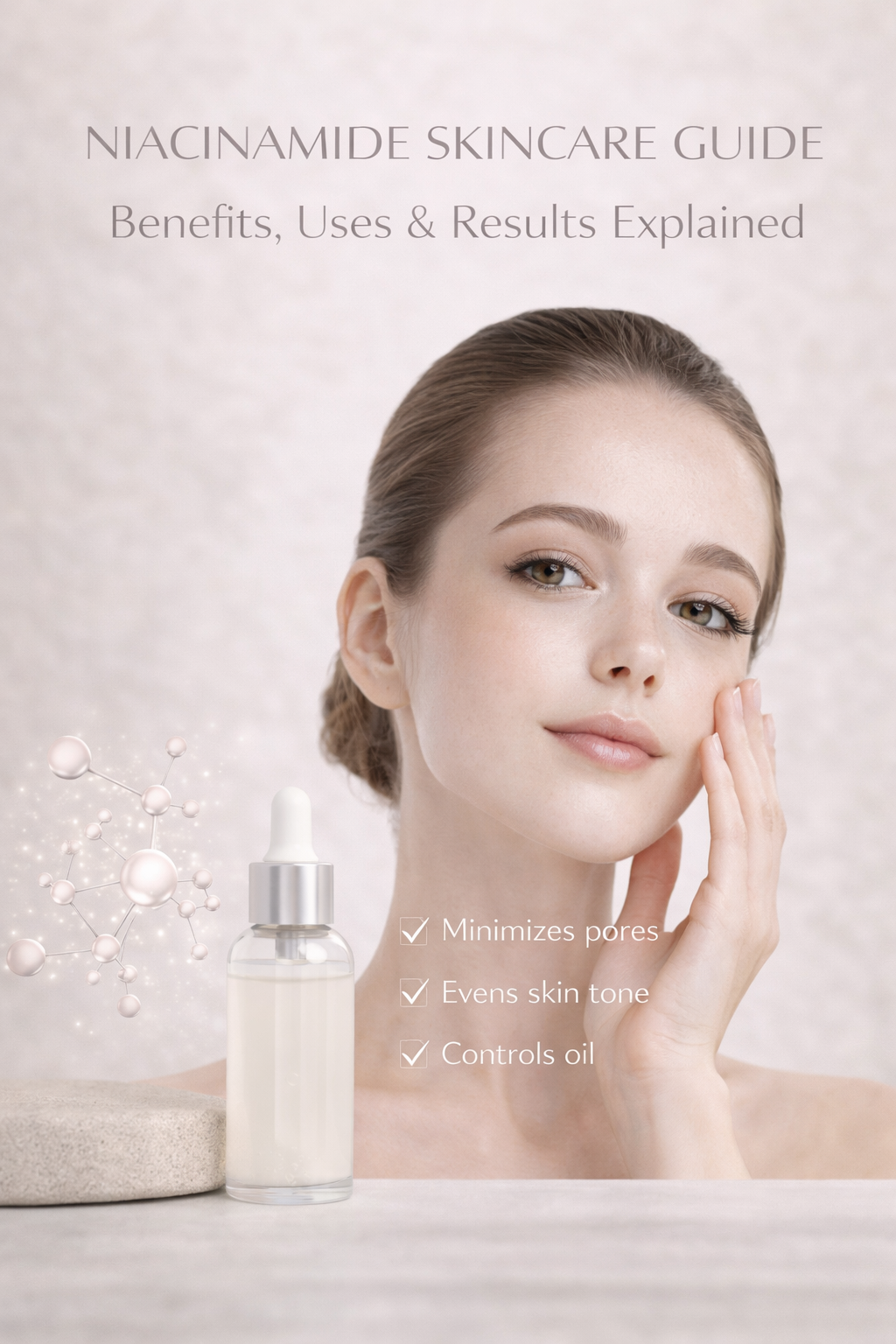
Niacinamide serum benefits include improving skin tone, reducing oil, and strengthening the skin barrier. Niacinamide is a favourite among dermatologists and skincare enthusiasts because it helps even skin tone, control oil, and minimise pores. It helps even skin tone, controls oil, and minimises pores – appealing to many skin types.
Niacinamide appears in many serums and moisturisers because it does it all: strengthens the skin barrier, controls oil, calms irritation, and clears your skin.
This niacinamide skincare guide first explains the science behind niacinamide, then explores its benefits, outlines how to use it correctly, and finally describes the results people can expect with regular use.
What Is Niacinamide?
Niacinamide, a form of Vitamin B3, is found in serums, moisturisers, toners, and creams for its ability to strengthen skin and boost resilience. A healthy barrier protects against damage and keeps skin looking its best. Adding niacinamide to your routine is a simple way to enhance your skin’s natural glow.
Unlike some active skincare ingredients that can irritate sensitive skin, niacinamide is known for being gentle and suitable for most skin types. It can be used by individuals with oily, acne-prone, sensitive, or mature skin.
When applied topically, niacinamide helps improve the skin’s ability to retain moisture while protecting it from environmental damage such as pollution, UV exposure, and oxidative stress.
Understanding what niacinamide does helps explain why dermatologists frequently recommend it as part of a balanced skincare routine.
What Does Niacinamide Do for Skin?
Niacinamide supports multiple biological functions in the skin. It helps improve ceramide production, which maintains the skin’s protective barrier.
A weak skin barrier causes dryness, irritation, breakouts, and sensitivity. Niacinamide strengthens the barrier, making skin more resilient and balanced.
Niacinamide’s anti-inflammatory properties calm redness, reduce irritation, and help acne-prone or sensitive skin.
Regular niacinamide use enhances skin renewal, giving smoother texture, even tone, and better clarity over time.
Niacinamide Serum Benefits for Skin
Niacinamide is popular because it addresses many skin concerns. A good serum simplifies your routine and delivers multifaceted results.
Improves Skin Barrier Strength
One of the most important niacinamide serum benefits is its ability to strengthen the skin barrier. By increasing ceramide production, niacinamide helps prevent moisture loss and protects the skin from environmental damage.
A healthy barrier allows the skin to remain hydrated and resilient.
Reduces Excess Oil Production
People with oily or combination skin often have excess sebum. Niacinamide regulates oil without over-drying.
Balanced oil production can lead to fewer clogged pores and a reduced likelihood of breakouts.
Minimises the Appearance of Enlarged Pores
Excess oil, congestion, and low elasticity cause enlarged pores. Niacinamide balances oil and improves texture, making pores less noticeable.
Helps Reduce Dark Spots and Uneven Skin Tone
Niacinamide fades dark spots and evens tone by slowing melanin transfer. Regular use gradually brightens and evens skin.
With consistent use, many people notice a more even and brighter complexion.
Supports Collagen Production
Collagen supports firmness and elasticity. Niacinamide supports collagen synthesis, which may help reduce fine lines and early signs of ageing.
Calms Redness and Inflammation
With anti – inflammatory properties, niacinamide calms irritation – ideal for acne-prone or sensitive skin.
These effects make niacinamide serum benefits widely recognised among dermatologists.
Niacinamide Serum for Acne, Pores and Oily Skin
Many people use niacinamide to address acne.
How Niacinamide Helps Acne
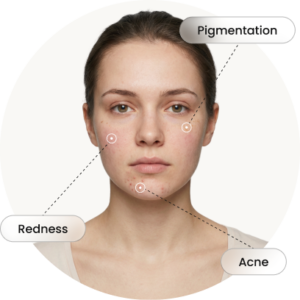
Acne stems from excess oil, clogged pores, bacteria, and inflammation. Niacinamide addresses several factors at once.
Niacinamide manages oil, reducing clogged pores. Its soothing effect eases redness and swelling, making skin look and feel calmer.
Pore Refinement
When acne flares, pores often appear enlarged. Regular niacinamide use refines skin and reduces pore size.
Support for Post-Acne Marks
Post-acne, dark marks and uneven tone may linger. Niacinamide gradually fades these by decreasing pigment transfer.
For individuals with persistent acne and pigmentation, skincare formulations combining Azelaic Acid and Niacinamide can be particularly effective. Azelaic acid targets acne-causing bacteria and pigmentation, while niacinamide helps soothe inflammation and strengthen the skin barrier.
When used together, these products create a complete skincare system that helps achieve clearer, healthier-looking skin.
How to Use Niacinamide Serum Correctly
Using niacinamide serum correctly maximises its benefits.
- Step 1: Cleanse. Use a gentle cleanser to remove dirt and oil, enabling effective ingredient absorption.
- Step 2: Apply the Niacinamide Serum. After cleansing, apply a few drops of niacinamide serum to the face. Gently spread the product across the skin using light upward motions. Niacinamide serums usually have between 5 and 10 per cent of the active ingredient. This amount is typically enough to be effective, but still gentle on your skin.
- Step 3: Follow with Moisturiser: Applying moisturiser after serum helps lock in hydration and further strengthen the skin barrier.
- Step 4: Use Sunscreen During the Day. When using niacinamide, it’s still really important to wear sunscreen every day. This helps prevent new dark spots from forming and keeps your skin safe from the sun’s harmful rays.
Niacinamide can usually be applied both in the morning and at night as part of a daily skincare routine.
After learning how to use niacinamide, you might wonder when you’ll actually see results. The next section details what to expect after starting this ingredient.
Everyone’s skin is different, so how quickly you’ll see results depends on your skin type and what you’re hoping to improve.
Most people notice more hydrated, balanced skin after two to four weeks.
Changes like fewer dark spots, a smoother texture, and smaller-looking pores usually appear after 6 to 8 weeks.
Niacinamide works gradually, so be patient and stick to your routine.
Alongside the benefits of niacinamide, you may be considering other skincare options, such as hyaluronic acid. Let’s compare these popular choices to help you decide what fits best for your skin.
Niacinamide and hyaluronic acid offer different benefits; compare based on your main skin concern.
Role of Niacinamide
Niacinamide is a skincare ingredient that helps improve the way your skin works and fixes problems you can see. It does a few things: it helps control how much oil your skin produces, strengthens your skin’s barrier, reduces dark spots, and helps your skin produce more collagen.
Role of Hyaluronic Acid
Hyaluronic acid primarily hydrates by attracting and retaining moisture, making it ideal for dry or dehydrated skin.
Can They Be Used Together?
Niacinamide and hyaluronic acid can be used together and are often combined for complementary effects.
Hyaluronic acid helps keep your skin hydrated, and niacinamide strengthens your skin’s barrier, which can make your skin look clearer.
When choosing between niacinamide and hyaluronic acid, the decision should depend on the main skin concern. However, using both often provides the best overall skincare benefits.
So who should consider adding niacinamide to their routine? The next section outlines which skin types benefit most and why.
Niacinamide is considered suitable for nearly all skin types.
Oily skin benefits from oil regulation. Acne-prone skin sees reduced inflammation and fewer breakouts.
It’s great for people with dry or sensitive skin because it helps strengthen their skin. And for those who are worried about getting older, it’s also good because it helps their skin produce more collagen, making it look and feel better. This can even help improve the texture of their skin, making it look smoother and more youthful.
Gentle and versatile, niacinamide is widely recommended as a skincare staple.
Common Mistakes When Using Niacinamide
Although niacinamide is generally well-tolerated, certain mistakes can reduce its effectiveness.
If you have sensitive skin, be careful when using high-concentration products. It’s better to start with a lower amount, like 5 per cent, to see how your skin reacts. Many dermatologists recommend this because it can help prevent irritation.
Another common mistake is inconsistent use. Like most skincare ingredients, niacinamide requires regular application to deliver visible improvements.
Not using sunscreen can make it harder for treatments to address skin tone and pigmentation problems.
Conclusion
Niacinamide stands out in modern skincare because it addresses so many issues at once. It balances oil, evens out skin tone, and strengthens your skin’s barrier – all backed by plenty of dermatologist research. Whether your main concern is oily skin, uneven tone, or just keeping your skin healthy, niacinamide is a smart choice. Think of it as a multitasker for your skin, helping you achieve a more balanced, radiant look.
Understanding what niacinamide does for skin helps explain why it is frequently recommended for individuals with acne, enlarged pores, pigmentation concerns, and early signs of ageing.
When used consistently and correctly, niacinamide can significantly improve skin clarity, texture, and resilience.
For individuals seeking enhanced results, formulations that combine Azelaic Acid with Niacinamide can provide additional benefits by targeting acne, pigmentation, and inflammation simultaneously.
With patience and regular use, niacinamide can become an essential part of a balanced skincare routine that promotes healthier and more radiant skin over time.